
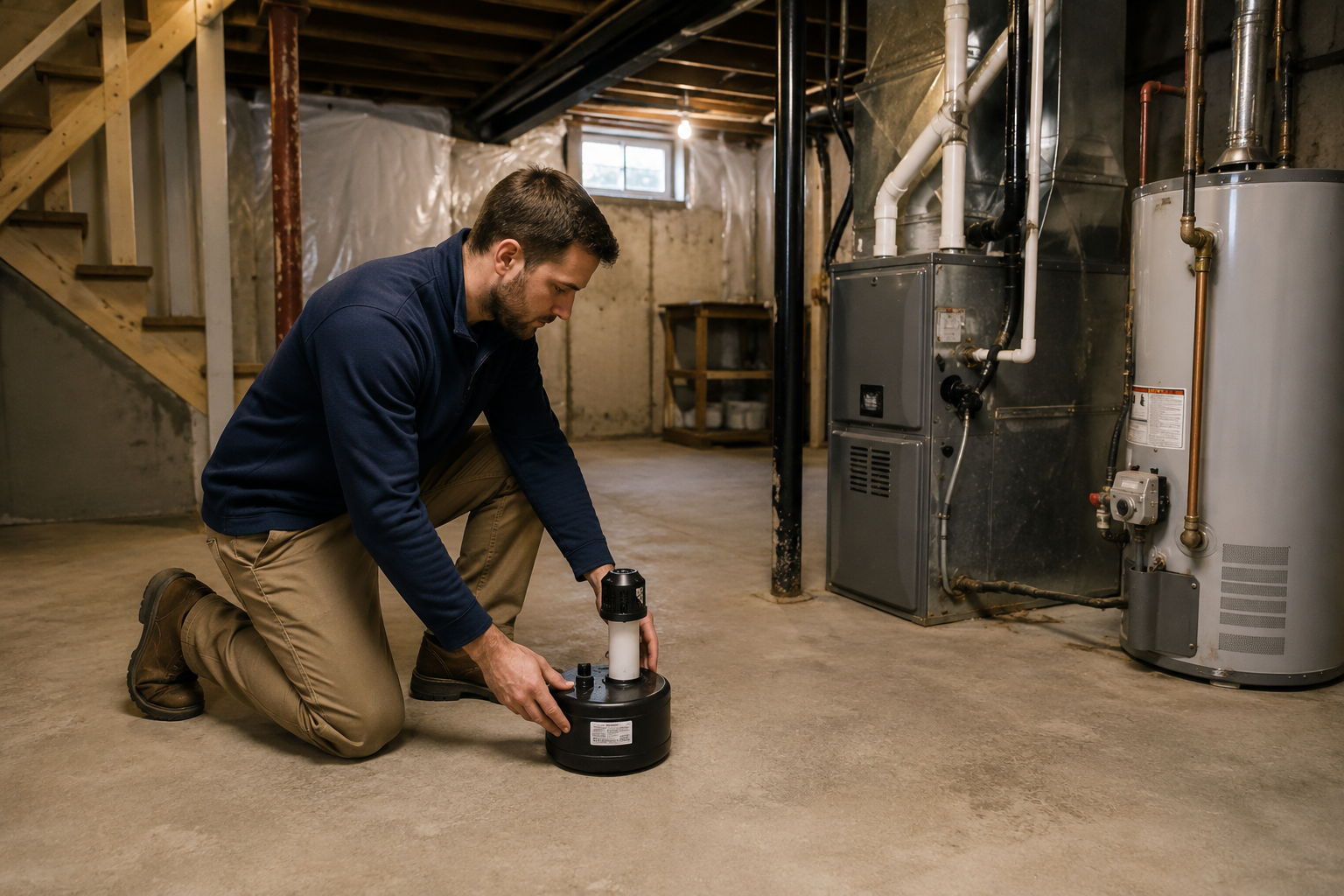

Do You Need a Radon Test in Illinois or Indiana?
If you’re buying a home in Illinois or Indiana, sooner or later someone is going to say the word “radon.”
Usually right after you’ve already worried about the roof, the foundation, the sewer line, and whether that weird basement smell is “normal.”
Then suddenly there’s another thing floating invisibly in the air trying to kill you.
Real estate can be a very relaxing experience.
The short answer is: yes, in most cases, a radon test is worth doing. Especially in Illinois and Indiana, where radon levels are relatively common.
But before you panic and start imagining your basement glowing green, let’s talk about what radon actually is and how buyers should realistically think about it.
So…What Is Radon?
Radon is a naturally occurring gas that comes from soil and rock underground. You can’t see it, smell it, or taste it.
Which honestly feels a little unfair.
Over time, high exposure to radon can increase lung cancer risk. That’s why it comes up during home inspections, especially in areas like the Midwest.
Illinois and Indiana both have a decent amount of radon-prone areas. It’s not some rare horror movie situation. It’s common enough that many homes either already have mitigation systems or end up installing them after testing.
A High Radon Result Does NOT Mean “Run Away”
This is where buyers sometimes overreact.
A radon result coming back high does not automatically mean the house is dangerous, defective, or falling apart underground.
It usually means one thing:
the home needs a mitigation system.
That’s it.
And radon mitigation is actually one of the more straightforward fixes in real estate. Compared to foundation problems, sewer repairs, or major water damage, radon is relatively manageable.
A typical mitigation system is basically a venting setup that redirects the gas safely outside. Once installed, levels usually drop significantly.
It’s not unusual at all.
Should Every Buyer Test for Radon?
Honestly, in Illinois and Indiana, it’s hard to argue against it.
The test itself is relatively inexpensive compared to the cost of the home, and it gives you useful information.
Especially if:
- the home has a basement
- you plan to spend a lot of time downstairs
- the home is older
- neighboring homes have had elevated radon levels
Even newer homes can have radon. This isn’t an “old house” problem.
Sometimes buyers assume, “Well the seller lived here 20 years and seems fine.”
That’s not exactly how science works.
What Happens If the Test Comes Back High?
Most of the time, buyers ask the seller to either:
- install a mitigation system
- provide a credit
- or negotiate something in between
And usually, this is not the part of the transaction where deals fall apart.
Experienced agents and attorneys see this all the time.
The bigger issue is usually not the radon itself. It’s when buyers already feel nervous about several other inspection items, and the radon result becomes one more thing mentally piled on top.
Don’t Confuse “Scary” With “Expensive”
This happens a lot in inspections.
Some issues sound terrifying but are relatively fixable. Others sound minor and quietly cost a fortune.
Radon falls into the first category.
The word itself sounds alarming, mostly because it’s invisible and associated with health risks. But in practical real estate terms, mitigation is often less dramatic than buyers expect.
Meanwhile, the cracked sewer line nobody noticed is sitting quietly underground plotting financial destruction.
One More Thing Buyers Should Know
Radon levels can fluctuate.
Weather, seasons, ventilation, and even how often a basement door gets opened can affect readings somewhat.
That’s why sometimes you’ll see homes retested later, or sellers provide previous mitigation documentation.
The important thing isn’t getting emotionally attached to one number. It’s understanding whether the issue is manageable.
And most of the time, it is.