

For Chicago-area homeowners, Northwest Indiana can look very tempting.
Lower property taxes. More house for the money. A little more yard. Maybe even a three-car garage without needing to refinance your soul.
But moving from Illinois to Indiana is not automatically an upgrade in every category. You gain some things, and you give up others.
Here’s the practical version.
You Gain: Lower Property Taxes
This is usually the first thing Illinois homeowners notice.
Indiana generally caps property taxes on qualifying owner-occupied homesteads at 1% of gross assessed value, although certain voter-approved charges can fall outside the cap.
Illinois does not have the same type of individual property-tax cap. Property taxes depend on assessed value and the needs of local taxing districts.
So when someone moves from Cook, DuPage or another higher-tax Illinois area into Munster, Dyer or Schererville, the annual tax difference can be substantial.
And that matters because you don’t just buy a house once—you pay the carrying costs every month.
You Gain: More House for the Budget
One of the biggest reasons people cross the border is simply space.
Depending on the neighborhood and price point, the same budget that buys an older or smaller home in some Chicago suburbs may buy you:
- More square footage
- A larger lot
- A newer home
- More garage space
- Or some combination of all four
This doesn’t mean Munster and Dyer are cheap anymore. They aren’t.
But buyers moving from higher-priced Illinois suburbs can still find that their equity goes further once they cross the state line.
You Gain: A Lower State Income-Tax Rate
Illinois’ individual income-tax rate is currently 4.95%. Indiana’s 2026 state individual adjusted gross income-tax rate is 2.95%, although Indiana residents may also pay county income tax.
So yes, there can be another tax advantage here.
But this is exactly why I wouldn’t compare the two states using one headline number. Property tax, state income tax and county taxes all need to be looked at together.
Your accountant will be more useful than TikTok for this part.
You Give Up: Some Convenience
If you’re moving from a denser Chicago suburb, one adjustment can be simple geography.
Northwest Indiana is more car-dependent.
Restaurants, shopping, doctors and everyday errands are readily available, but you may find yourself driving farther or more often than you did before.
If your idea of an ideal Saturday is walking to coffee, lunch, Trader Joe’s and the train station without touching your car, choose your Indiana location carefully.
You Give Up: An Easier Chicago Commute
This is probably the biggest practical trade-off for people who still work downtown.
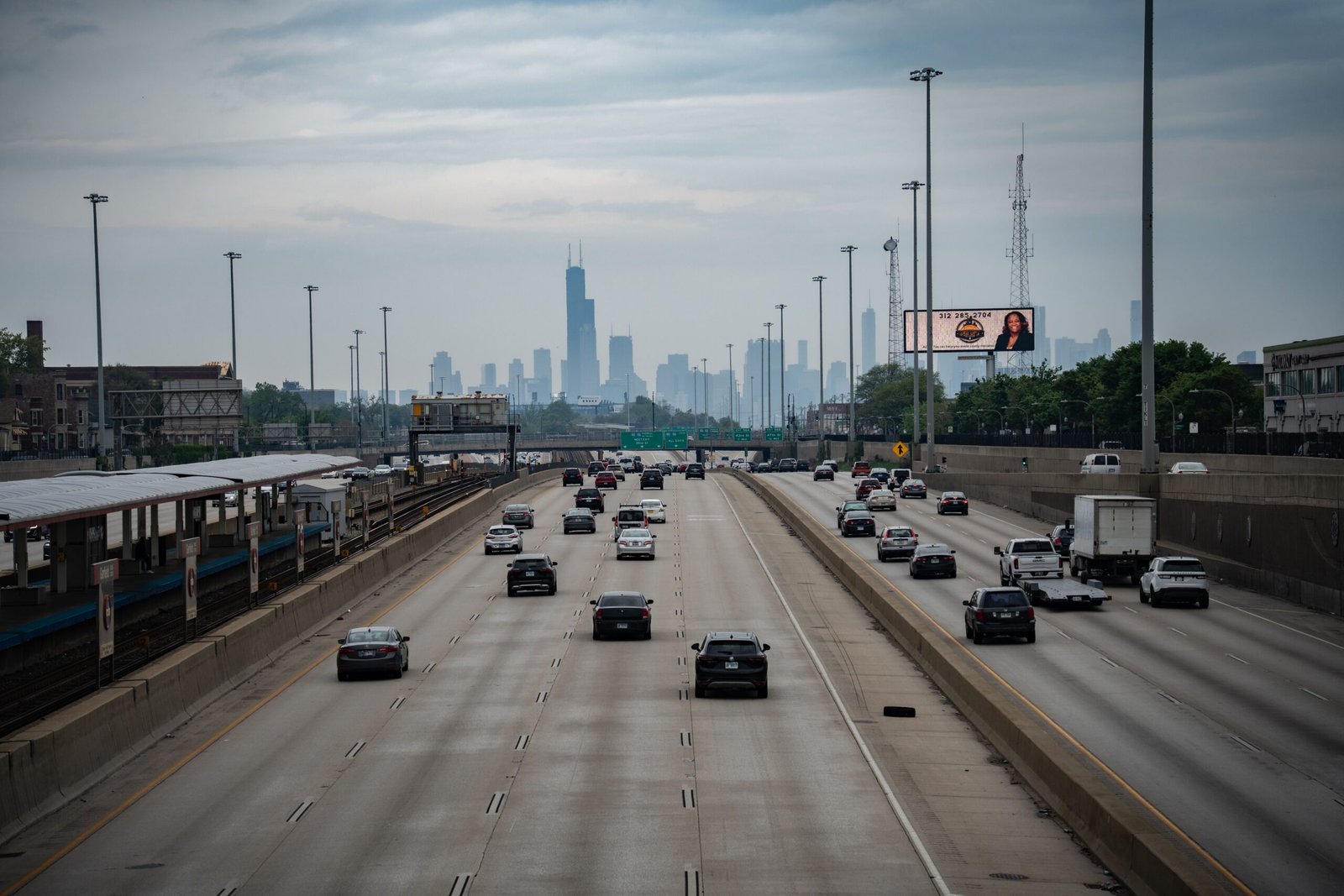
Munster is geographically close to Illinois, but close on a map isn’t always close at 7:45 a.m.
Traffic on I-80/94 can turn an innocent commute into a relationship.
The South Shore Line has also expanded transportation options in Northwest Indiana, but whether the commute works for you depends heavily on where you live, where you work and how often you need to go in.
If you’re hybrid and commute twice a week, it may feel completely manageable.
Five days a week? I’d test-drive the commute before buying the house.
You May Gain: Newer Housing
Another difference is housing stock.
Many established Illinois suburbs have beautiful homes, mature trees and great neighborhoods—but also plenty of houses built 40, 60 or 100 years ago.
Dyer, Schererville, Crown Point and other Northwest Indiana communities have more pockets of newer construction.
That can mean newer roofs, electrical systems, HVAC, layouts and insulation, although newer certainly doesn’t mean maintenance-free.
For some buyers, the appeal isn’t just getting a bigger house. It’s getting a house with fewer immediate projects.
You May Give Up: Mature Neighborhood Character
The flip side?
Newer subdivisions can sometimes feel…new.
Smaller trees. More similar houses. Less architectural variety.
If you love older neighborhoods with mature landscaping, walkable blocks and houses that don’t all appear to share the same grandparents, some Illinois communities may have an advantage.
Munster is interesting here because it offers more established neighborhoods than many newer Northwest Indiana communities.
Schools: Don’t Compare States—Compare Districts
People often ask whether Illinois or Indiana has “better schools.”
That’s too broad to be useful.
School quality varies dramatically by district on both sides of the border. Someone comparing Naperville with Munster is asking a very different question from someone comparing two completely different Illinois and Indiana districts.
If schools matter to your move, compare the specific districts, programs, boundaries and schools serving the actual homes you’re considering.
And remember: boundaries can change. Always verify them directly rather than relying solely on a listing.
Lifestyle: Different, Not Necessarily Better or Worse
This is probably the part spreadsheets can’t decide for you.
Northwest Indiana can offer lower carrying costs, more space and a quieter suburban feel while keeping Chicago relatively accessible.
Illinois may offer more density, public transit, established commercial areas, restaurant variety and easier access to parts of Chicagoland.
Neither is automatically better.
The real question is what you’re actually trying to improve.
If you’re paying $15,000 or $20,000 a year in property taxes and rarely use the things you’re paying a premium to live near, crossing the border deserves a serious look.
If you’re downtown four days a week, love your neighborhood and walk everywhere, saving money may not compensate for what you’re giving up.
Before moving, don’t just compare two houses.
Compare two versions of your everyday life.
The cheaper property-tax bill is nice. But so is getting home before dinner.